Europe’s Heatwave Signals a Changing Climate
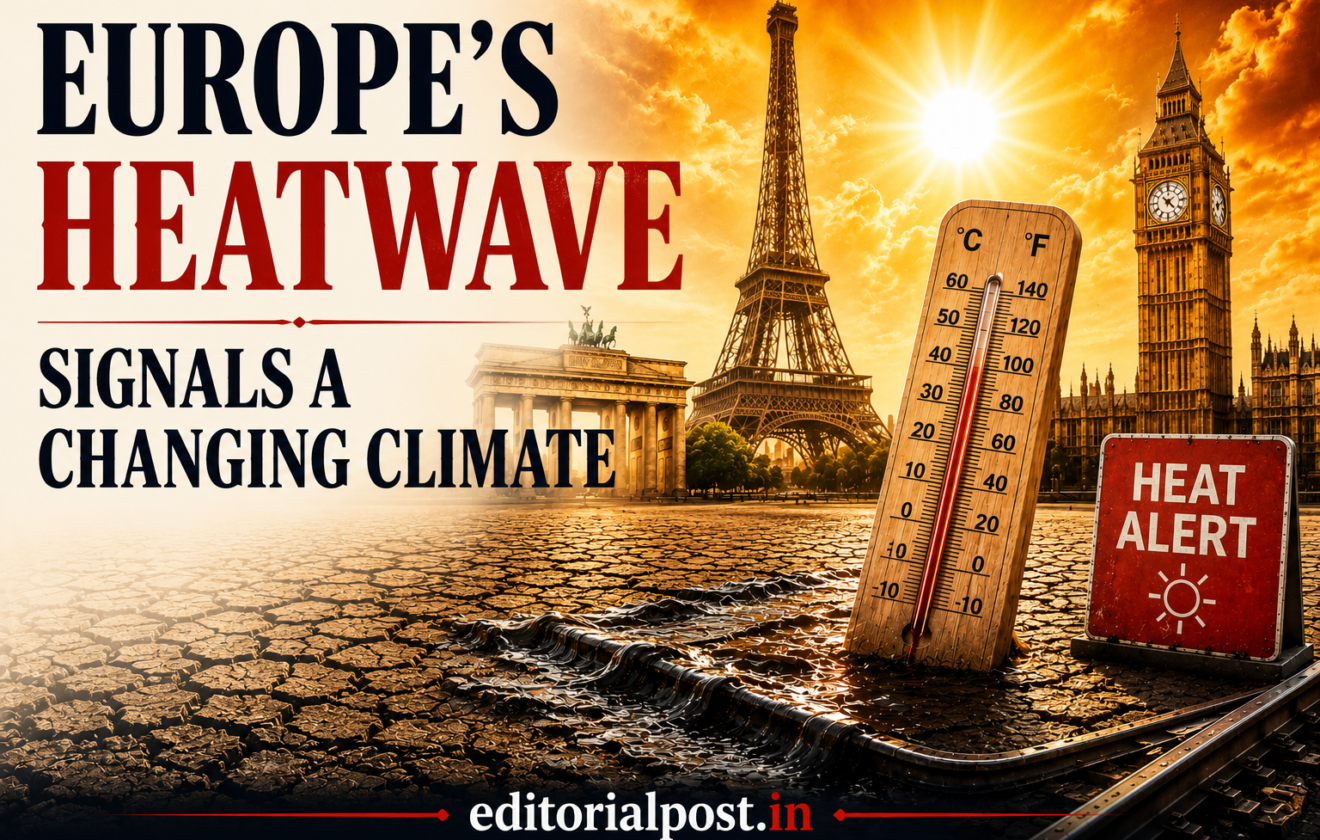
Europe has long been associated with temperate summers, efficient public infrastructure, and high standards of living. Yet the recent heatwave sweeping across several European countries demonstrates that economic prosperity alone cannot shield societies from the growing consequences of a changing climate. Record-breaking temperatures, damaged transport networks, pressure on healthcare systems, school closures, and rising fatalities have transformed what would once have been considered an exceptional weather event into a reminder of the vulnerabilities that even the world’s most developed nations continue to face. The immediate concern extends beyond the discomfort of unusually hot weather. It raises fundamental questions about whether existing infrastructure, public institutions, and climate adaptation policies are evolving quickly enough to meet increasingly unpredictable environmental conditions.
The severity of the current heatwave is not explained by temperature alone. Europe has historically designed much of its housing, transport infrastructure, and public services around cold winters rather than prolonged periods of extreme heat. Buildings that efficiently retain warmth during winter become increasingly difficult to cool during summer. Railway systems, road surfaces, hospitals, and schools were constructed according to climatic assumptions that are now being challenged with growing frequency. As temperatures rise beyond historical norms, these systems begin to fail in ways that directly affect public safety, economic activity, and essential services. Climate resilience therefore cannot be measured only by environmental targets; it must also be reflected in the capacity of public infrastructure to function under rapidly changing conditions.
The crisis also exposes an important demographic reality. Europe has one of the world’s oldest populations, making prolonged heatwaves a significant public health challenge. Older citizens are particularly vulnerable to dehydration, heat exhaustion, and heatstroke, while hospitals face mounting pressure during extended periods of extreme weather. Public health planning has traditionally focused on infectious diseases and winter emergencies, yet climate-related health risks now require equal attention. Early warning systems, community outreach, emergency medical preparedness, and accessible cooling facilities must increasingly become integral components of public health policy rather than temporary emergency responses.
Another important lesson lies in the growing relationship between climate events and economic resilience. Disruptions to transport networks, reduced workplace productivity, higher electricity demand, agricultural stress, and wildfire risks collectively impose substantial economic costs. Climate change is no longer an environmental issue operating separately from economic policy. It increasingly influences investment decisions, infrastructure planning, insurance costs, energy security, and long-term national competitiveness. Governments that delay adaptation may ultimately face far greater financial burdens than those investing proactively in resilient infrastructure and climate preparedness.
The European experience also offers a broader international perspective. Countries that have traditionally experienced higher temperatures have developed certain behavioural and infrastructural adaptations over decades. Regions unaccustomed to such extremes often face greater disruption when unprecedented heat arrives because institutions, buildings, and public expectations remain aligned with historical climate patterns. This reinforces an important principle: climate adaptation cannot rely solely on past weather records. Public policy must increasingly anticipate future climatic realities rather than assume that historical averages will continue to define the decades ahead.
Extreme weather events are likely to become more frequent and more intense across many parts of the world. The present heatwave should therefore be viewed not as an isolated European emergency but as part of a broader global transition that demands sustained institutional preparedness. Climate resilience now extends beyond emissions reduction to include urban planning, public health, infrastructure design, disaster preparedness, and informed governance. The measure of national preparedness will increasingly depend not only on economic strength but also on the ability of institutions to anticipate environmental change and protect citizens from its consequences before temporary crises become enduring realities.