Understanding a Child’s Silent Attachment
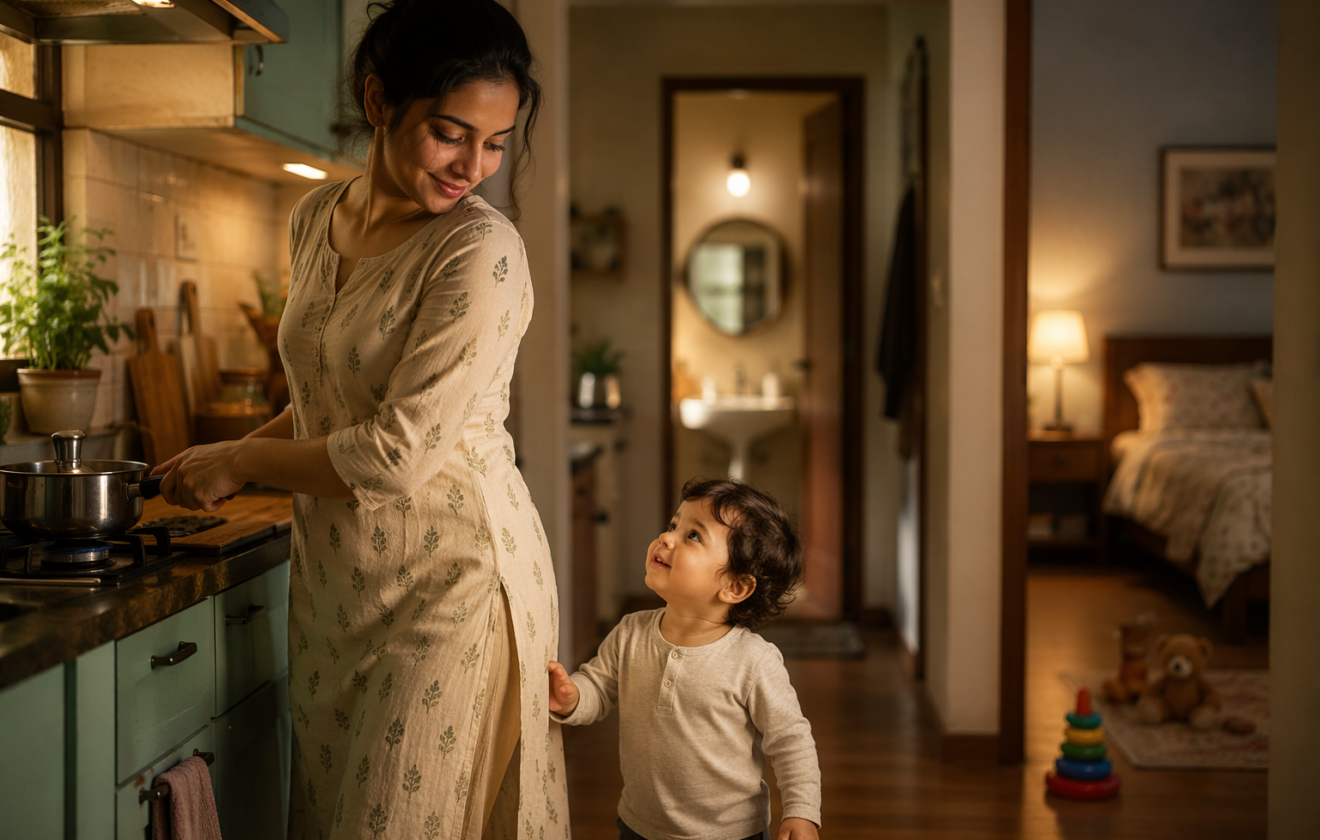
The everyday scene of a young child constantly following a parent is often interpreted as dependency, discomfort, or even behavioural inconvenience. Yet, beneath this simple pattern lies a deeper psychological and developmental process that reflects not weakness, but the earliest formation of independence. The behaviour of a child trailing a caregiver across rooms, waiting outside closed doors, or becoming distressed in brief separations is not random. It is rooted in fundamental principles of early childhood development that shape emotional security, learning capacity, and future social confidence.
At the centre of this behaviour lies what developmental psychology defines as attachment. The theory, introduced in the mid-twentieth century, emphasises that a child requires a “secure base” from which to explore the world. This base is not merely physical proximity, but an emotional assurance that a trusted caregiver is available and responsive. A child who repeatedly returns to or follows a parent is not exhibiting excessive reliance; rather, the child is verifying safety before extending outward curiosity. Paradoxically, it is this closeness that enables distance. A securely attached child ventures further, experiments more freely, and returns only to reaffirm stability before exploring again.
This dynamic challenges a common parental assumption that independence must be encouraged through distance. In reality, independence is constructed through consistent reassurance. When a child feels secure, exploration becomes a natural extension of trust. When that security is uncertain, the child clings more tightly, not out of choice, but out of instinct. This instinct is neither learned nor imposed; it is deeply embedded in human survival mechanisms. Over generations, proximity to caregivers has ensured safety, and the modern child’s behaviour continues to reflect this evolutionary inheritance.
Equally significant is the role of observation in early learning. A child’s brain develops at an extraordinary pace during the first few years, absorbing patterns, actions, and emotional cues from the immediate environment. The caregiver becomes the primary reference point for interpreting unfamiliar situations. When a child encounters something new, the immediate reaction is often to look towards the parent’s face. This process, known as social referencing, determines whether the child approaches or withdraws. A calm expression invites exploration; a fearful one signals caution. Thus, the parent’s presence is not passive. It actively shapes how the child perceives and interacts with the world.
Scientific research further reinforces this understanding through the concept of mirror neurons. These neural mechanisms enable a child to replicate observed behaviour even without direct instruction. When a parent performs routine tasks—cooking, organising, or even simple gestures—the child’s brain simulates the same actions. Over time, these observations are stored and later reproduced. This explains why children often imitate adult behaviour with surprising accuracy, sometimes days after first exposure. The act of following a parent, therefore, is not merely about staying close; it is a process of continuous learning and internalisation.
Another dimension of this attachment is sensory, particularly the role of scent. Studies have shown that even within days of birth, infants can recognise their caregiver’s scent, associating it with safety and comfort. This sensory connection remains significant in early childhood. The presence of a familiar scent can reduce stress and create a sense of stability, even in the caregiver’s temporary absence. The child’s inclination to stay close is thus reinforced not only visually or emotionally, but biologically.
It is also important to recognise that the intensity of this behaviour is not constant. There are phases when a child appears more “clingy” than usual. These periods often coincide with developmental leaps, illness, or exposure to unfamiliar environments. During such times, the child’s need for reassurance increases because the internal and external worlds are both undergoing change. Rather than indicating regression, this heightened attachment often signals growth. The brain is processing new information, acquiring new skills, and seeking stability to manage this expansion.
When separation occurs, the child’s physiological response further illustrates the seriousness of this bond. Stress hormones increase, heart rate accelerates, and attention narrows to locating the caregiver. This reaction is not a behavioural fault; it is a biological response designed to ensure survival. However, the way caregivers respond to reunion plays a crucial role in shaping long-term emotional health. When a returning parent offers calm reassurance and physical closeness, the child learns that separation is temporary and manageable. If the response is dismissive or harsh, the child may internalise a sense of insecurity, which can influence future relationships and emotional regulation.
In this context, the act of a child following a parent should not be viewed as a phase to be controlled or eliminated. It is a developmental signal that the child is building trust, learning through observation, and establishing the emotional foundations necessary for independence. Attempts to prematurely enforce separation or discourage this behaviour may disrupt this natural process, potentially leading to increased anxiety rather than resilience.
Modern parenting often operates under competing pressures—productivity, personal space, and societal expectations of early independence. Yet, understanding the underlying science of attachment invites a reconsideration of these expectations. The child who seeks closeness is not delaying independence; the child is constructing it. The path to self-reliance does not begin with distance, but with dependable presence.
Ultimately, the quiet persistence of a child following a caregiver is a form of communication. It expresses trust, need, curiosity, and learning, all at once. Recognising this behaviour as a sign of healthy development rather than inconvenience allows for a more informed and compassionate response. In supporting this attachment, caregivers are not encouraging dependence; they are laying the groundwork for confident, secure, and independent individuals in the years to come.