Republic Day
Republic Day and the Republic We Must Constantly Renew
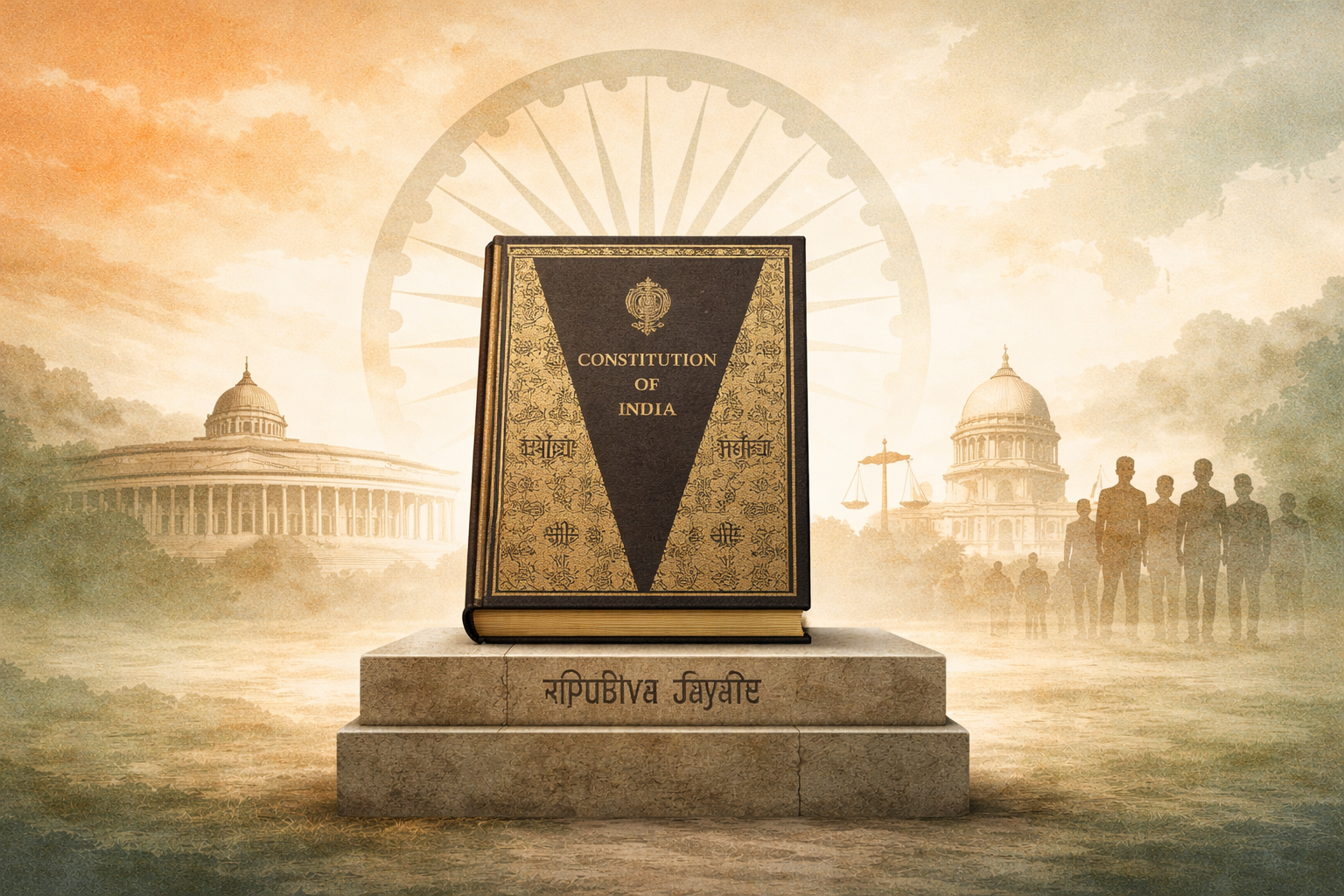
India’s Republic Day is not merely a ceremonial anniversary marked on the calendar; it is a constitutional milestone that continues to define the character, direction, and obligations of the Indian state. Observed every year on 26 January, the day commemorates the coming into force of the Constitution in 1950, transforming a newly independent nation into a republic governed by the will of its people and the supremacy of law. More than seven decades later, Republic Day invites reflection not only on the achievements of the Indian Republic, but also on the distance still to be travelled in realising its constitutional promise.
The choice of 26 January was itself symbolic. It recalled the declaration of Purna Swaraj made by the Indian National Congress in 1930, asserting complete independence as the nation’s goal. Two decades later, political freedom acquired institutional meaning through a Constitution that sought to bind a vast, diverse, and unequal society into a common civic framework. The framers did not merely design a structure of governance; they articulated a moral vision for India, grounded in justice, liberty, equality, and fraternity. Republic Day, therefore, is as much about values as it is about institutions.
The Indian Constitution is often described as one of the world’s most detailed and ambitious. It was framed in the shadow of Partition, mass displacement, poverty, and deep social hierarchies. Yet it placed extraordinary faith in democratic governance, universal adult franchise, and fundamental rights. At a time when many newly decolonised nations opted for authoritarian or limited democratic systems, India chose to vest sovereignty in its people without qualification. That choice remains one of the Republic’s greatest strengths, but also its greatest test.
Over the decades, the Republic has demonstrated remarkable resilience. Democratic continuity, regular elections, judicial independence, and a free press have endured despite internal emergencies, political upheavals, and social conflict. The expansion of rights through constitutional interpretation, particularly in areas of personal liberty, dignity, and social justice, has kept the Constitution responsive to changing times. Federalism, though often strained, has allowed India’s diversity to find political expression within a unified framework.
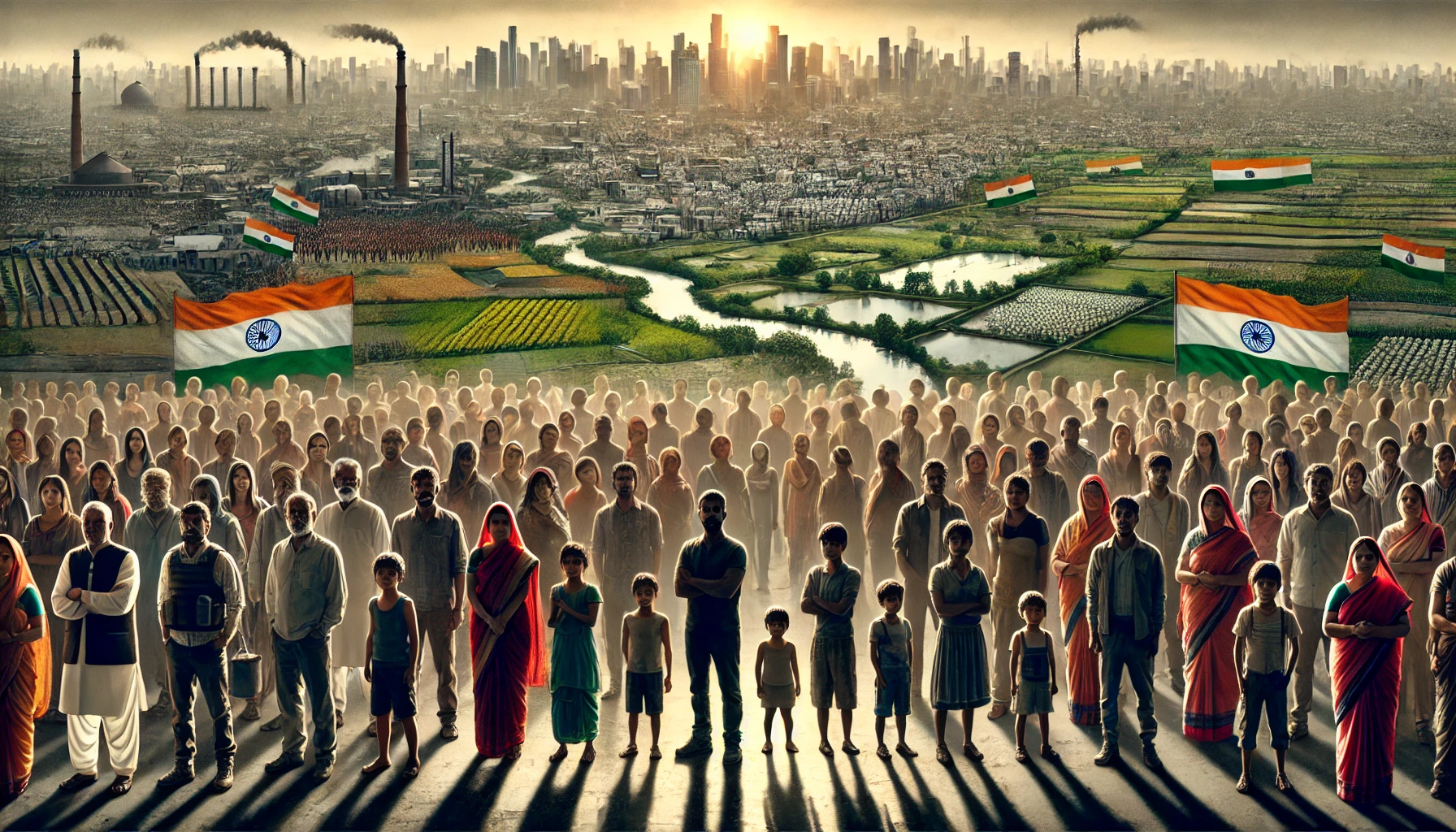
At the same time, Republic Day compels an honest assessment of constitutional performance. The persistence of social and economic inequality raises difficult questions about substantive equality. While political rights are firmly entrenched, access to quality education, healthcare, and dignified livelihoods remains uneven. The Constitution envisioned not merely formal equality before law, but conditions that would allow every citizen to exercise freedom meaningfully. That aspiration remains only partially fulfilled.
Concerns regarding institutional balance have also become central to contemporary debate. The strength of a republic lies in the independence and mutual respect of its constitutional organs. Executive authority, legislative accountability, and judicial oversight must function within clearly defined limits. When any one institution dominates or undermines the others, constitutional equilibrium is disturbed. Republic Day is a reminder that power in a republic is not absolute; it is conditional, accountable, and derived from the Constitution.
Equally important is the role of citizens in sustaining the Republic. The Constitution grants rights, but it also presupposes civic responsibility. Democratic participation cannot be reduced to voting alone. Respect for constitutional methods, tolerance of dissent, and commitment to pluralism are essential to republican life. In a society as diverse as India’s, disagreement is inevitable; constitutional democracy provides the framework to manage it peacefully. The erosion of this culture, whether through polarisation or disregard for institutions, weakens the Republic from within.
The annual Republic Day parade, with its display of military discipline and cultural diversity, often captures public attention. Yet the deeper meaning of the day lies beyond spectacle. It rests in everyday adherence to constitutional principles by governments and citizens alike. Laws must be framed and enforced with fairness, not expediency. Policies must aim at inclusion, not exclusion. Governance must be transparent, responsive, and rooted in constitutional morality rather than majoritarian impulse.
As India advances economically and asserts itself on the global stage, the quality of its republican institutions will increasingly shape its credibility. Development divorced from constitutional values risks creating growth without justice and power without legitimacy. The framers were clear that democracy in India could not survive on procedures alone; it required a shared commitment to ethical governance and social reform. Republic Day renews that commitment annually, but its real test lies in daily practice.
Seventy-seven years after the Constitution came into force, the Indian Republic stands at a moment of both confidence and caution. Its democratic experiment has endured against considerable odds, yet it faces new challenges in the form of social fragmentation, institutional stress, and rising expectations. Republic Day should therefore be observed not only with pride in past achievements, but with seriousness about present responsibilities.
Ultimately, the Republic is not a static inheritance but a living arrangement that demands constant care. Constitutions do not defend themselves; they are defended by institutions that respect their limits and citizens who value their spirit. Republic Day reminds the nation that sovereignty resides not in symbols or ceremonies, but in the collective commitment to constitutional governance. The future of the Indian Republic will depend on how faithfully that commitment is honoured, long after the parades conclude and the flags are folded away.