World Cup and Discipline
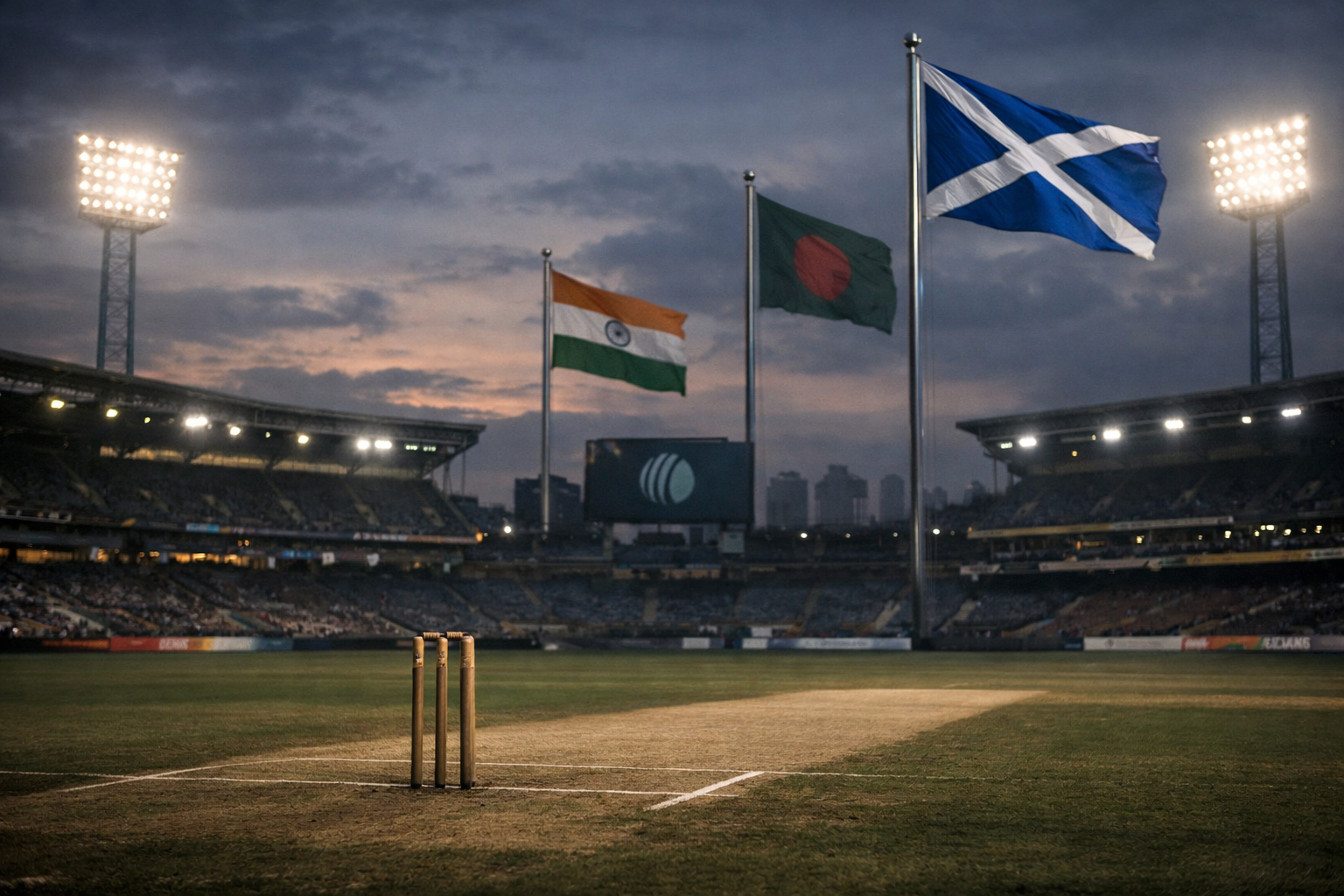
World Cup and Discipline: What the ICC’s Decision Signifies
In international cricket, rules, discipline, and respect for the host nation are regarded as foundational principles. The recent decision taken by the International Cricket Council (ICC) in relation to the forthcoming T20 World Cup brings these principles sharply into focus. Bangladesh’s exclusion from the tournament following its refusal to play matches in India, and the subsequent inclusion of Scotland, may appear severe, but it is best understood as a rule-based and necessary intervention rather than an emotional or political response.
An examination of the background to this dispute shows that developments during the Indian Premier League and the stance later adopted by the Bangladesh Cricket Board went beyond the scope of routine bilateral disagreement. Refusing to participate in matches hosted by the designated host nation directly challenges the structure, credibility, and uniformity of a global tournament. In such circumstances, expectations of special accommodation from the governing body were unlikely to be met.
Bangladesh’s request to play at a neutral venue, citing security concerns, must also be viewed in this broader context. Questioning the preparedness and security assurances of the host country risks undermining international confidence in the organisation of major sporting events. If such demands were routinely accepted, the discipline governing global tournaments would weaken considerably. From this perspective, the ICC’s refusal reflects not rigidity, but an effort to safeguard the long-term integrity of international cricket.
The opportunity extended to Scotland following Bangladesh’s withdrawal carries its own significance. From the standpoint of cricket’s global development, the inclusion of emerging teams on the world stage is a positive outcome. This is not a symbolic entry, but one earned through adherence to established procedures. For Scotland, it represents both recognition and responsibility—an opportunity to compete at the highest level under clear and uniform rules.
Equally noteworthy is the ICC’s firm response to suggestions of a boycott from Pakistan. The message conveyed is unambiguous: international sporting bodies cannot allow competitive structures to be shaped by political pressure or strategic threats. Were such precedents to be set, global tournaments would risk becoming hostage to non-sporting considerations.
For Bangladesh, the consequences of this decision are undoubtedly significant. The impact may extend to international rankings, financial prospects, and long-term cricketing relations. Yet, viewed through a wider lens, the episode reinforces a central reality of international sport—participation is inseparable from compliance with agreed norms and obligations.
In conclusion, this decision should not be interpreted merely as punitive action against a single team. It represents a broader assertion of the principles on which international cricket rests. Matches are contested on the field, but the game itself is sustained by discipline, trust, and respect for the host nation. Through this decision, the ICC has reaffirmed those fundamentals with clarity and resolve.