UGC’s New Rules 2026
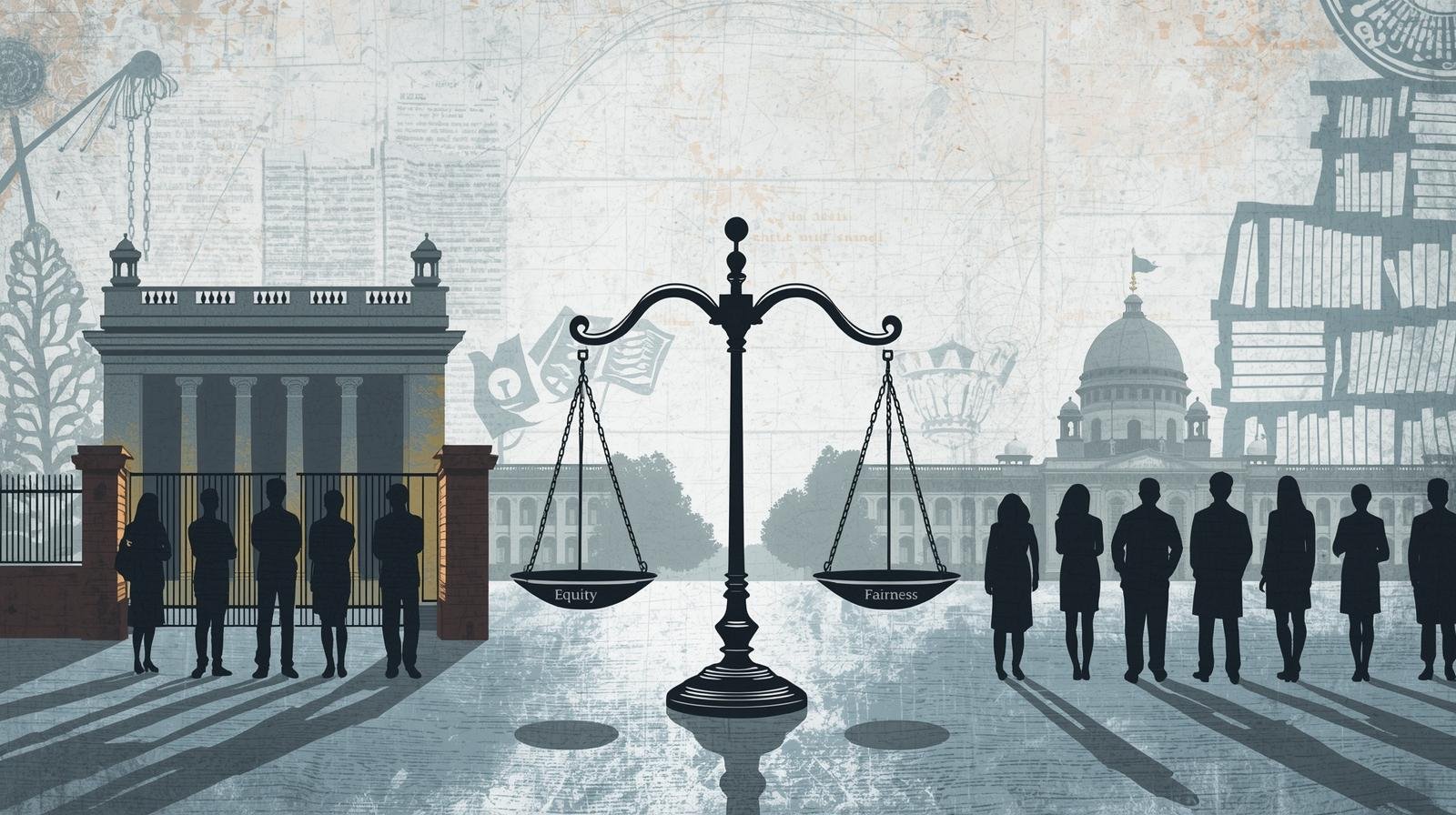
UGC’s New Rules — Social Justice or the Beginning of Division?
The University Grants Commission (UGC) has recently introduced new rules aimed at preventing discrimination in higher education institutions (Anti-Discrimination Rules 2026). These rules have triggered intense debate across the country. On social media, hashtags such as “UGC Rollback” and “Shame on UGC” are trending, while sections of the Savarna community have taken to the streets to express their anger. Rules brought in with the stated objective of establishing social justice in a field as sacred as education are now being questioned for potentially deepening social divisions along caste lines.
In accordance with the directions of the Supreme Court, and in the backdrop of tragic incidents such as the suicides of Rohith Vemula and Payal Tadvi, there is no doubt that strict measures were required to prevent caste-based discrimination on university campuses. However, a close reading of the draft prepared by the UGC, and the one-sided nature of its provisions, raises serious concerns. Instead of serving as a mechanism for justice, these rules risk becoming instruments of punishment and retaliation.
Under the new framework, if a student or staff member is found guilty of discrimination, their degree may be withheld, and they may be declared ineligible for any future government employment or UGC examinations. This is a punishment that can irreversibly damage an individual’s entire life. What is particularly troubling is that the structure of these rules appears to be framed as “General versus SC/ST/OBC,” implicitly assuming that discrimination occurs only from one social group towards another.
This leads to a fundamental question—does discrimination have a caste? In colleges, disputes often arise from student union elections, hostel conflicts, or personal rivalries. If a false complaint is filed against a Savarna student in such circumstances, what safeguards do these rules provide for their protection? When hateful and inflammatory slogans targeting specific castes appear on the walls of campuses like JNU or BHU, do they not fall within the definition of discrimination? Was the injustice faced by Kashmiri Pandits not discrimination? Laws must apply equally to all, rather than viewing society through a caste lens that places one group permanently in the dock.
The proposed creation of bodies such as “Equity Committees” and “Equity Squads” within institutions also raises apprehension. There is a strong possibility that these mechanisms may be used more for political manoeuvring than for genuinely improving the academic environment. The requirement to convene meetings within 24 hours and submit reports within 15 days, followed by swift and severe action, could foster an atmosphere of fear on campuses. The future of talented and hardworking students hanging under the threat of a single unverified complaint is dangerous for any democratic system.
There is also an unmistakable political dimension to this issue. With elections on the horizon, questions are being raised about whether the Savarna community is being targeted to appease a particular vote bank. A growing sentiment is that a community which has traditionally supported those in power is now being taken for granted. This perception has led to widespread mobilisation, with various organisations and student groups uniting in protest from Rajasthan to Delhi.
Social justice is an extremely sensitive and complex issue. It cannot be achieved merely through the blunt use of legal authority; it requires an environment of trust, balance, and dialogue. The UGC’s new rules resemble a double-edged sword. Correcting one injustice by inflicting another, or disrupting social harmony by creating fear, is not the hallmark of a civilised society.
The government and the UGC must urgently reconsider these rules. Discrimination must certainly be eradicated, but the laws designed to address it should act as protectors, not predators. What the country’s education system truly needs today is an impartial mechanism to examine complaints, strict action against those who file false accusations, and, above all, rules that rise above caste identities to offer equal protection to all as students. Otherwise, university campuses risk transforming from centres of learning into battlegrounds of caste-based conflict.