Imbalance in Maharashtra’s Railway Priorities
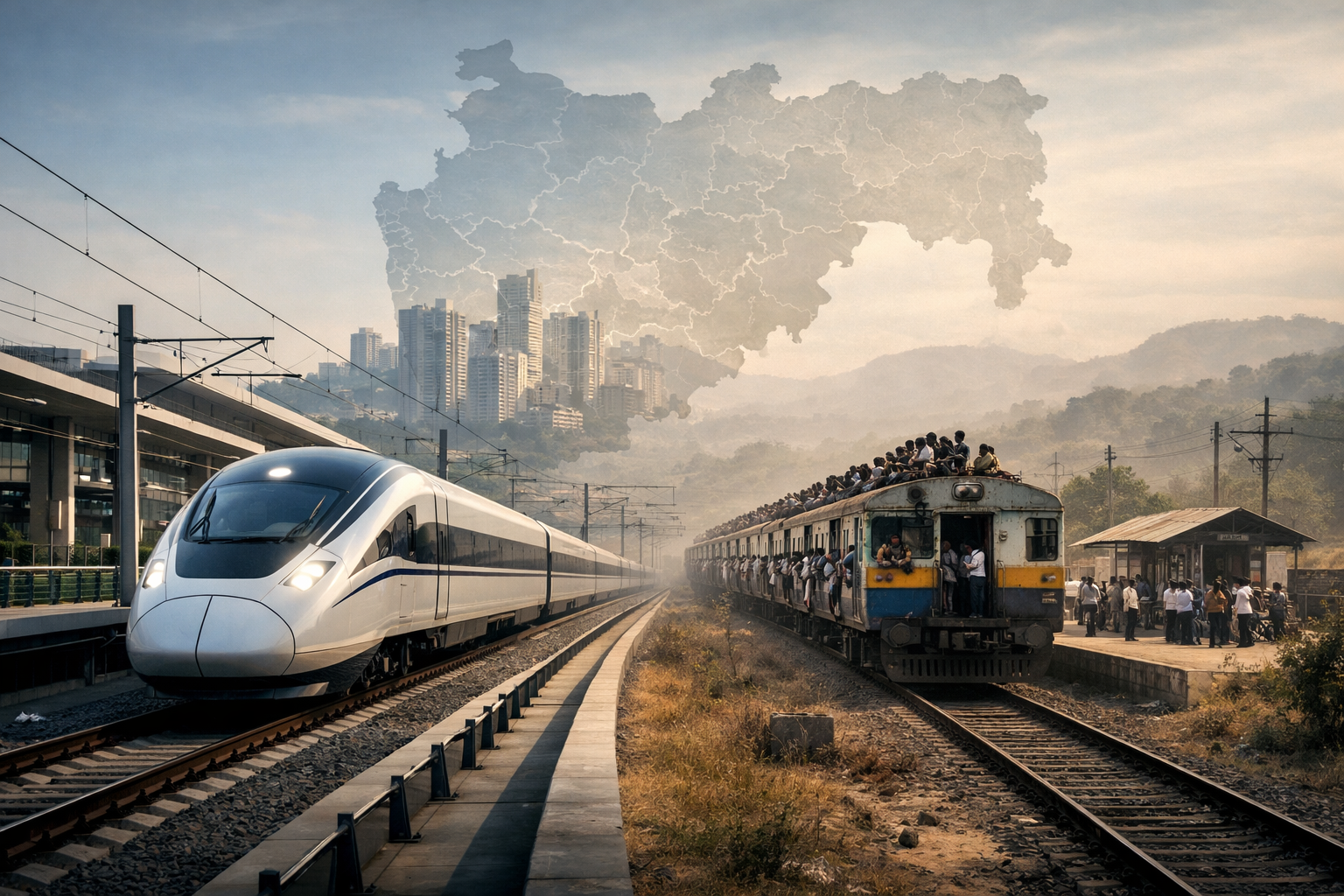
Railway development in Maharashtra
Recent railway budgets have placed strong emphasis on speed, technology, and high-profile infrastructure. Announcements such as reducing the Mumbai–Pune travel time to under an hour and allocating funds for a Pune–Hyderabad high-speed corridor are presented as symbols of progress and modernisation. At first glance, these initiatives appear forward-looking. Yet behind these ambitious claims lies a more fundamental question: does this direction truly reflect passenger-centric railway planning, or does it remain confined to a narrow set of urban corridors. For a state as large and diverse as Maharashtra, this question carries serious public importance.
While Maharashtra features prominently in high-speed rail discussions, large parts of the state continue to struggle with basic railway connectivity. Regions such as Marathwada, Vidarbha, Konkan, and parts of North Maharashtra have long-standing demands that remain unaddressed. Investment flows towards select routes linking major cities, while districts such as Chhatrapati Sambhajinagar, Beed, Parbhani, and Nanded continue to depend on a limited number of long-distance trains. During festivals and peak travel periods, overcrowding, lack of reservations, and insufficient general coaches expose the structural neglect of these regions. These are not temporary inconveniences, but indicators of persistent planning failures.
Marathwada and Vidarbha illustrate the consequences of uneven railway development. Despite being economically and socially significant, these regions lack adequate connections to major hubs such as Pune and Nashik. Chhatrapati Sambhajinagar, in particular, is emerging as an important industrial and commercial centre, yet it remains poorly connected to other growth corridors. Direct railway links to cities such as Nashik or Surat could significantly improve trade, education access, and employment mobility. However, such proposals have remained on paper for years, reflecting a wider reluctance to prioritise regional balance over symbolic projects.
Connectivity between Pune and the Konkan region presents a similar picture. Konkan contributes substantially to Maharashtra’s workforce, with thousands travelling to Pune for education and employment. Tourism potential along this route is also considerable. Despite this, direct railway services remain limited and infrequent. In contrast, road projects continue to receive attention, even as they raise concerns related to land acquisition, environmental degradation, and long-term sustainability. Railways, especially in ecologically sensitive regions, offer a safer and more sustainable alternative, yet this advantage is rarely reflected in budgetary priorities.
Passenger inconvenience is further compounded by decisions related to train stoppages and scheduling. Several long-distance trains serving Marathwada now terminate or halt at peripheral stations around Pune, often at odd hours. For passengers arriving late at night or early morning, access to affordable transport into the city becomes difficult and expensive. Large urban centres such as Pimpri-Chinchwad, with populations comparable to major cities, continue to have very limited express train halts. This mismatch between urban growth and railway planning highlights a disconnect between policy decisions and ground realities.
Taken together, these issues point to a railway development model that favours visibility over inclusiveness. High-speed rail and flagship projects are undoubtedly valuable, but they cannot substitute for a comprehensive and balanced transport network. Railways are not merely instruments of speed; they are public systems that shape regional equity, economic opportunity, and social integration. When development remains concentrated in a few metropolitan corridors, it deepens regional disparities and weakens public trust in national infrastructure planning.
Maharashtra’s experience underlines the need for a recalibration of railway priorities. Future budgets must look beyond headline projects and address the everyday mobility needs of ordinary citizens. Strengthening basic connectivity, ensuring fair regional distribution, and aligning railway planning with demographic and economic realities are essential steps. Only through such an inclusive approach can railway development serve not just select cities, but the state as a whole.