The Digital Mirage of Modern Roads
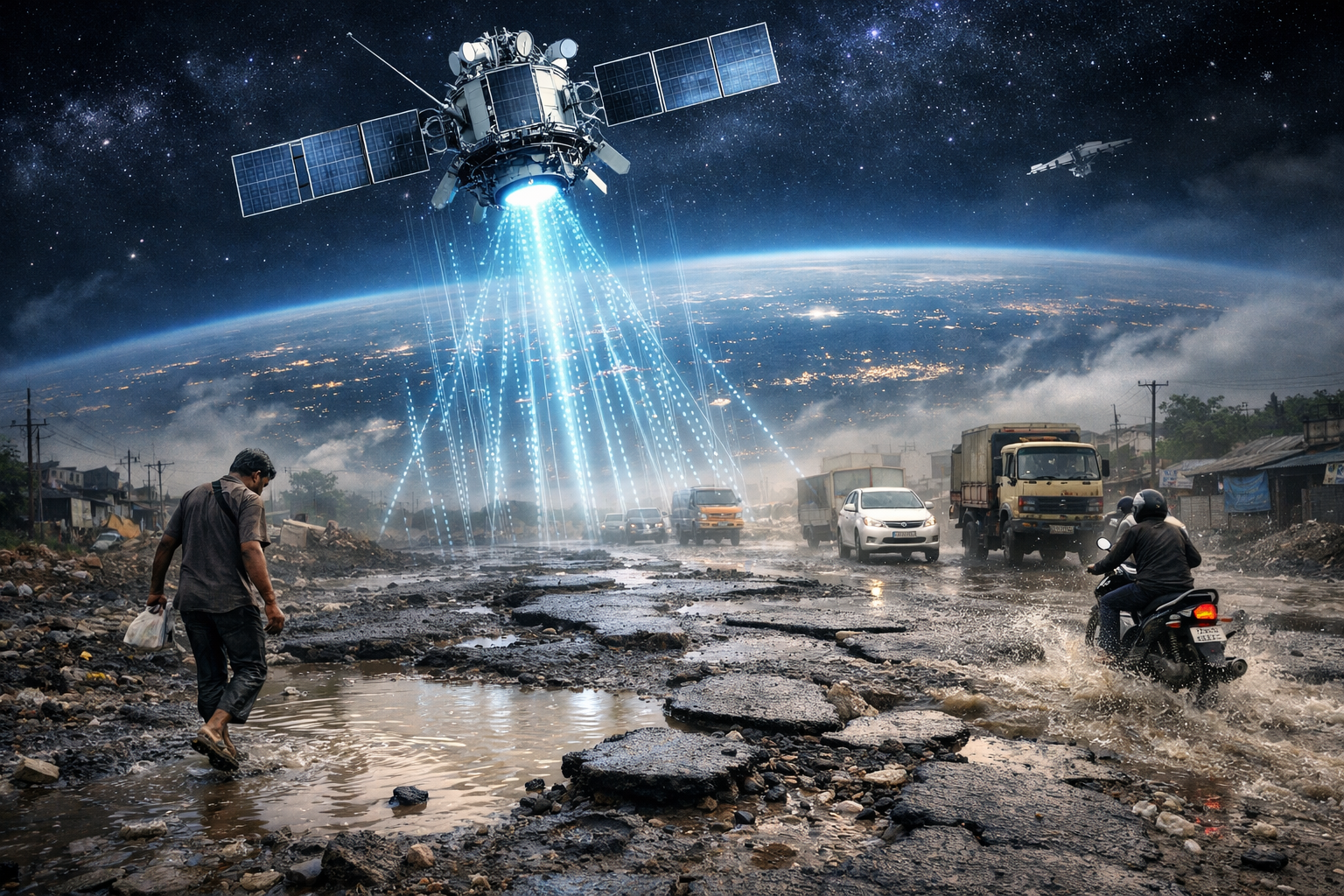
When the Prime Minister speaks of deploying space technology to build the nation’s roads, the imagery evoked is one of interstellar precision—a futurist’s dream of seamless transit monitored by the unblinking eyes of satellites. Yet, for the average citizen navigating monsoon-ravaged craters and hollowed-out arteries, this high-tech branding feels less like progress and more like a cynical smokescreen. There is a dangerous confusion currently permeating the public discourse: the belief that “space technology” is a surrogate for structural integrity. While the official rhetoric champions satellite photography and sophisticated monitoring as pillars of modern governance, the visceral experience on the ground remains a testament to a profound dereliction of duty. We are told the heavens are watching our highways, yet we cannot see a single percentage of perceptible improvement in the roads we actually drive. This disconnect reveals a disturbing truth: space technology is being used as a branding tool for a system that remains fundamentally broken at the terrestrial level.
To understand why our infrastructure continues to fail, we must deconstruct the actual, limited utility of orbital assets. Current applications of space technology are confined strictly to the “upper-level” logistical theatre of mapping and planning. Satellite data is undeniably effective for determining optimal road alignment, navigating through mountain ranges, rivers, and forests, and providing environmental data points that were once difficult to obtain. During construction, drones are deployed as high-tech foremen to check “progress”—verifying that the physical footprint of the road matches the digital blueprint. However, these tools operate entirely in a two-dimensional silhouette. They can confirm that a road exists and that its geometry is correct, but they are fundamentally incapable of touching the physical “ground level” of construction. While governments worldwide utilize data from their space agencies for such highway data, this efficiency in planning does not equate to durability in execution. A drone can verify that a contractor has laid a stretch of road, but it cannot verify if that road has the structural soul to survive its first monsoon.
The longevity of a road is governed by two uncompromising physical factors that remain invisible to any satellite lens: drainage systems and material integrity. This is the “So What?” of infrastructure failure that no high-tech monitor can address. When drainage systems are poorly designed or neglected—often a result of engineered obsolescence to save costs—water has nowhere to go but down. This seepage is the silent killer of transit. It infiltrates the sub-layers, attacking the bitumen and the soil base which form the road’s internal skeleton. Space technology provides zero utility in ensuring that a drainage pipe is angled correctly or that the soil has been compacted to standard. When water penetrates these layers, it turns a once-solid path into a fragile, hollow shell. The most advanced satellite in orbit cannot prevent a road from dissolving from the inside out if the basic, low-tech principles of hydraulic engineering are ignored at the ground level.
This technical failure is rarely accidental; it is a symptom of systemic rot. The “pothole cycle” that plagues our nation is fueled by the intentional use of “third-class” materials, a practice driven by endemic corruption and a desperate need for illicit cost-cutting. While a drone records “progress,” it cannot detect the high-corruption shortcuts where bitumen is thinned or soil bases are substituted with inferior debris. As heavy trucks and passenger cars navigate these water-weakened stretches, the hollowed-out layers beneath the surface shift and collapse under the stress. This creates the 3D structural failure that space technology is blind to: the road looks whole from the sky, but it is empty beneath the surface. No amount of high-resolution imagery can compensate for the deliberate selection of substandard materials. High-tech monitoring can confirm a road’s presence, but it is powerless to verify the honesty of the mixture poured into the asphalt.
Ultimately, we are witnessing a sharp, nearly farcical dichotomy of progress. We have invested heavily in the overhead luxury of space-based data, yet we continue to fail at the underfoot reality of basic engineering and ethical oversight. The digital mirage of modern roads—meticulously planned from the stars but crumbling under the first rain—suggests a misalignment of priorities. Space technology remains a sophisticated tool for mapping the silhouette of a nation, but it is no substitute for the integrity of the materials or the functionality of the drainage beneath our tires. Until the focus shifts from the optics of high-tech monitoring to the rigorous enforcement of ground-level quality, the citizen’s journey will remain a testament to systemic neglect rather than a triumph of the space age.