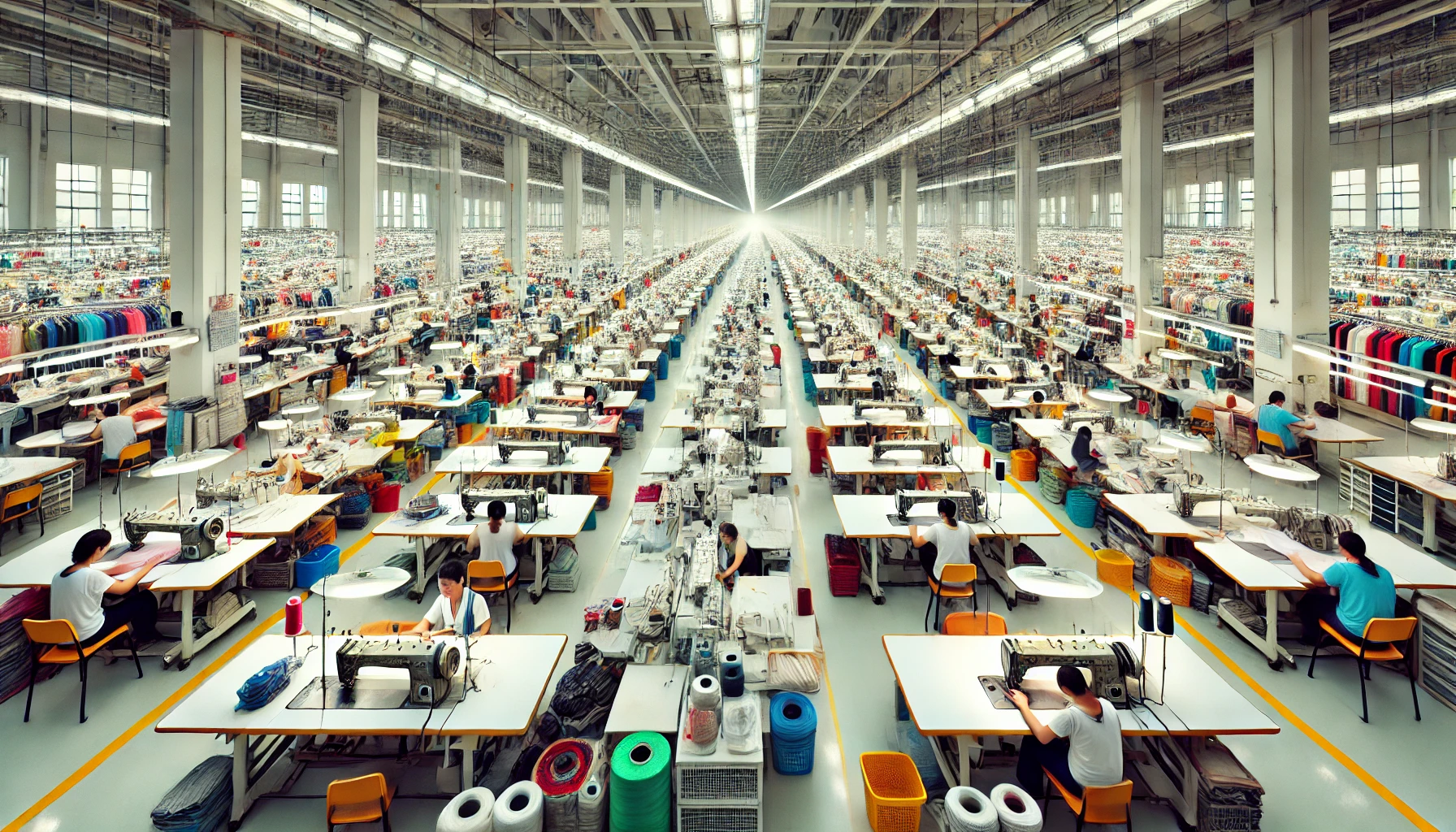
The scripted nature of Dhaka’s current industrial paralysis suggests something far more profound than a mere cycle of domestic unrest; it marks the decisive unravelling of a dominant economic narrative. For decades, the garment sector has functioned as the singular cardiovascular system of the Bangladeshi state, providing 84 percent of its foreign exchange reserves and underpinning 11 percent of its total GDP. More critically, the industry serves as a vital social stabilizer, employing 1.5 crore workers—predominantly women—whose livelihoods form the bedrock of the country’s fragile middle class. To witness the current shuttering of factories is to observe a pillar of national survival being systematically undermined. What is unfolding is not an isolated tragedy of governance, but a cold-blooded geopolitical realignment where India is tightening a logistical noose around its neighbor’s primary source of wealth.
New Delhi’s strategic masterstroke has been executed in the corridors of trade diplomacy rather than on a battlefield. By securing a landmark trade engagement with the European Union that moves toward zero-percent tariff access, India has launched a mercantilist pincer movement against 80 percent of Bangladesh’s export revenue. Historically, Dhaka’s competitive edge was built almost entirely on the “duty-free” advantage it enjoyed as a developing nation—a differentiator that allowed it to outpace India despite the latter’s massive domestic cotton resources. Indian leadership, most notably Commerce Minister Piyush Goyal, has long viewed this as a structural imbalance that artificially sidelined Indian manufacturing. With India now leveling the playing field through its own 0% tariff access to the $240 billion European market, the primary reason for global brands to favor Dhaka has vanished, effectively hollowing out Bangladesh’s competitive moat.
This diplomatic maneuver is being reinforced by a campaign of logistical strangulation and tariff arbitrage. Even before the recent political upheaval, Bangladesh was reeling from a 35 percent tariff shock in the United States, while India maintained a 25 percent “mileage” advantage in that same market. This price disparity created the initial opening for market capture, which India is now widening through an indirect physical blockade. By closing land ports and redirecting trade through more expensive, circuitous routes like Mumbai’s Nhava Sheva port, New Delhi has effectively severed Dhaka’s access to the growing markets of Nepal and Bhutan. This physical siege extends to the very power lines that sustain industrial production. The decision by Adani Power to curtail electricity supply from its Jharkhand plant—citing outstanding dues—has paralyzed a manufacturing sector that lacks the domestic hydro-power or coal reserves to operate independently. For an industry built on the relentless rhythm of high-volume sewing machines, the loss of consistent imported power is a terminal condition.
The crisis is further compounded by a strategic leveraging of raw materials. Currently, over ₹12,000 crore in unsold Indian yarn is stalled in Bangladesh, a backlog that has triggered an internal industrial civil war. Local Bangladeshi textile mills, fearing total obsolescence against cheaper Indian imports, have threatened to strike unless the interim government ends duty-free access for Indian yarn. This creates a paralyzing paradox for Dhaka: protect domestic mills and see the cost of finished garments skyrocket, or continue imports and face a labor revolt. This internal political vacuum has only deepened since the flight of Sheikh Hasina. While her era provided the predictable stability required by global fast-fashion giants, the interim administration of Nobel laureate Muhammad Yunus appears ill-equipped to manage an industrial complex built on low-cost labor and high-volume consistency. For global marques like Zara, H&M, Tommy Hilfiger, and Calvin Klein, the $400 million in lost orders during recent strikes is less a financial setback than a signal that the Bangladeshi “stability” they once purchased is no longer for sale.
As investors flee, the alternative trade routes proposed by Pakistan involving Central Asia and China are revealed as little more than a geopolitical mirage. Pakistan, burdened by its own widening trade deficits, offers a path to markets that lack the purchasing power of the West, while China remains a direct competitor in the textile space rather than a viable customer for Bangladeshi goods. New Delhi, conversely, is executing a long-term vision to reach $100 billion in textile exports by 2030, transforming its role from a back-end raw material supplier into the world’s primary “tailor.” By mobilizing manufacturing hubs across Gujarat, Maharashtra, and Rajasthan, and leveraging a network of 22 Free Trade Agreements, India is absorbing the capacity that Dhaka can no longer sustain. This is the emergence of a New World Order in textiles—a calculated realignment of the global supply chain where India has successfully converted a neighboring monopoly into its own definitive expansion opportunity.