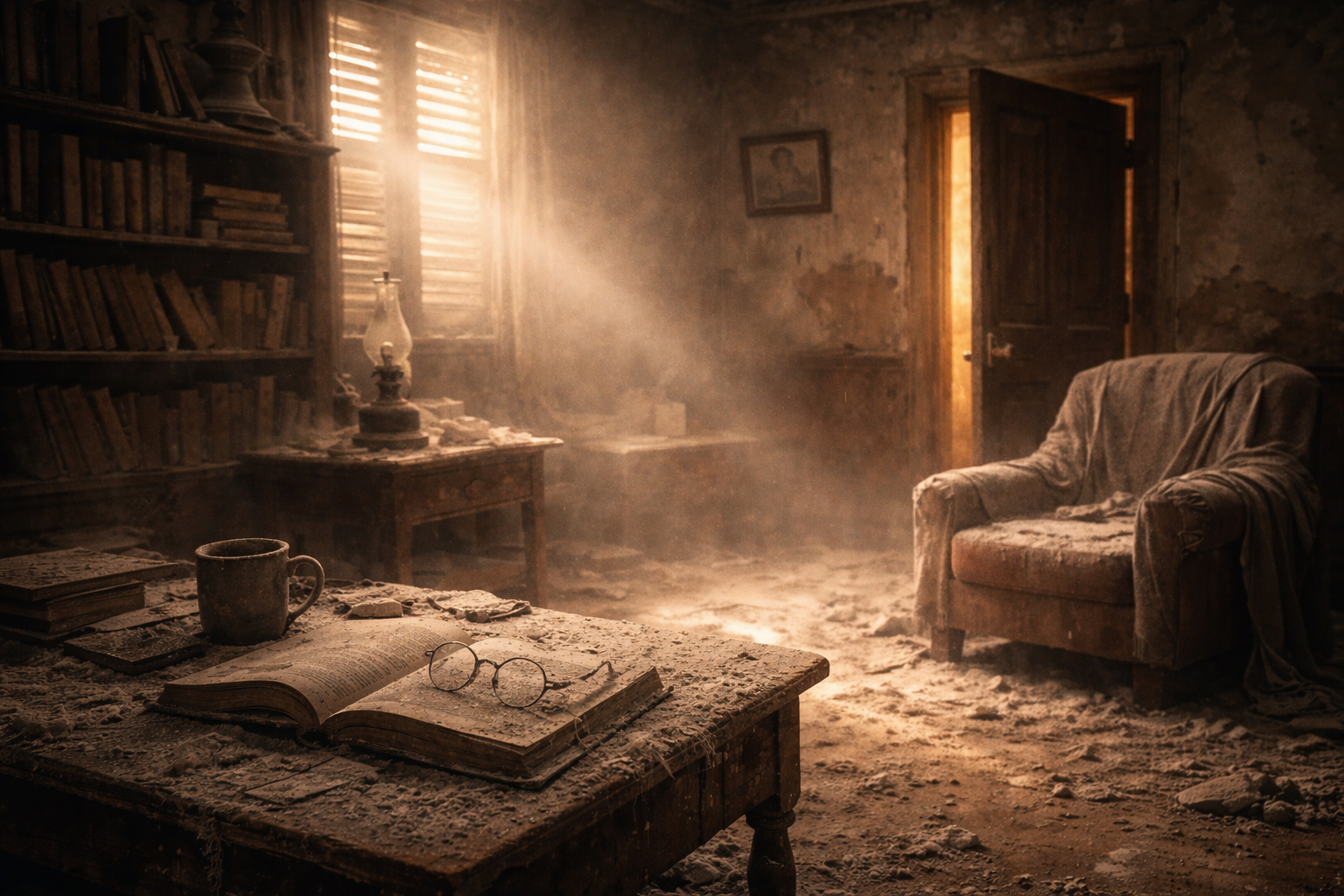
The expectation of hygiene in a sequestered environment illustrates a profound cognitive dissonance within the human perception of physical boundaries. We subscribe to a logical fallacy where a sealed room remains a sanctuary from the external world, yet the discovery of a thin gray film on a shelf or soft layers on a floor after weeks of vacancy shatters this illusion. The strategic importance of analyzing this phenomenon lies in acknowledging that “closed” does not denote “protected” in the fluid landscape of microscopic physics. Dust defies standard human logic regarding isolation; it is far more patient and persistent than our macroscopic intuition allows. The psychological impact of finding grime in a supposedly isolated space serves as a reminder that human boundaries are often irrelevant to the movement of matter. This phenomenon forces a deeper investigation into the material’s actual composition, transitioning from a mere visual annoyance to a sophisticated record of a space’s silent history.
To properly define dust is to recognize it as a microscopic mosaic of daily existence—a historical record rather than mere filth. It serves as a material legacy of a room’s inhabitants, remaining long after they have departed. A significant volume of this accumulation is internally generated; humans shed millions of skin cells and hair fragments daily, particles that do not vanish but remain suspended, waiting to settle. Furthermore, the environment begins to digest its own decor, shedding microscopic fibers from carpets, curtains, and furniture. These internal biological and structural contributions are joined by external infiltrators such as pollen, microscopic soil particles, and soot from pollution, all of which permeate the space. This complex blend remains as a persistent legacy, ensuring that a room is never truly empty. Instead, the material components of daily life transition from functional objects into a floating airborne record of time, turning the room into a quiet catchment area for the physical world.
The presence of dust in a sealed room further exposes the pervasive fallacy of the airtight building. Structures are not static vaults but function as breathing entities that interact constantly with their external environments through subtle, invisible pathways. Air does not merely sit; it infiltrates through microscopic gaps around electrical outlets, window seals, door frames, and even within the walls themselves. As temperatures oscillate and external pressure shifts occur, these atmospheric movements facilitate the entry of fine particles into seemingly protected zones. Once inside, internal air redistribution—driven by thermal cycles where air rises and falls—ensures that settled dust is periodically lifted back into the air and redistributed across surfaces. This continuous cycle of deposition ensures that even a space that appears spotless upon closure is already hosting a silent migration of particles that refuse to stand still.
While atmospheric movement facilitates the introduction and redistribution of particles, the eventual cessation of human activity allows gravity to assert itself as the silent architect of accumulation. In an active environment, human movement creates a chaotic atmosphere where particles are kept in constant suspension or directed toward ventilation systems. However, in the stillness of a closed room, the architectural breath settles, and gravity works uninterrupted. Horizontal surfaces—shelves, tables, and floorboards—become landing zones for a slow, vertical drift of matter. Because there is no motion to disturb the air or brush against a surface, the resulting coating is often thicker and more uniform than in a space subject to regular maintenance. This orderly deposition transforms the silent room into a catchment for the constant physical laws of the universe, manifesting as a visible veil of gray over every flat surface.
Beyond external entry and biological shedding, a building contributes to its own dust load through a process of perpetual structural attrition. No environment is ever truly still because the materials of its construction—concrete, wood, insulation, and paint—are in a state of slow-motion degradation. As a structure ages, microscopic fragments break free due to temperature fluctuations and material fatigue, adding to the internal load. This breakdown often manifests as that unmistakable unused room smell, a sensory signal of material decay hanging in the air. When humidity permeates the environment, these particles become even more tenacious, clinging to surfaces with a sticky, stubborn grip that makes the accumulation feel faster and more integrated into the room’s texture. Ultimately, every settled layer is proof that motion requires neither sound nor human presence, ensuring that dust remains an inevitable record of time and motion in a world that refuses to stand still.