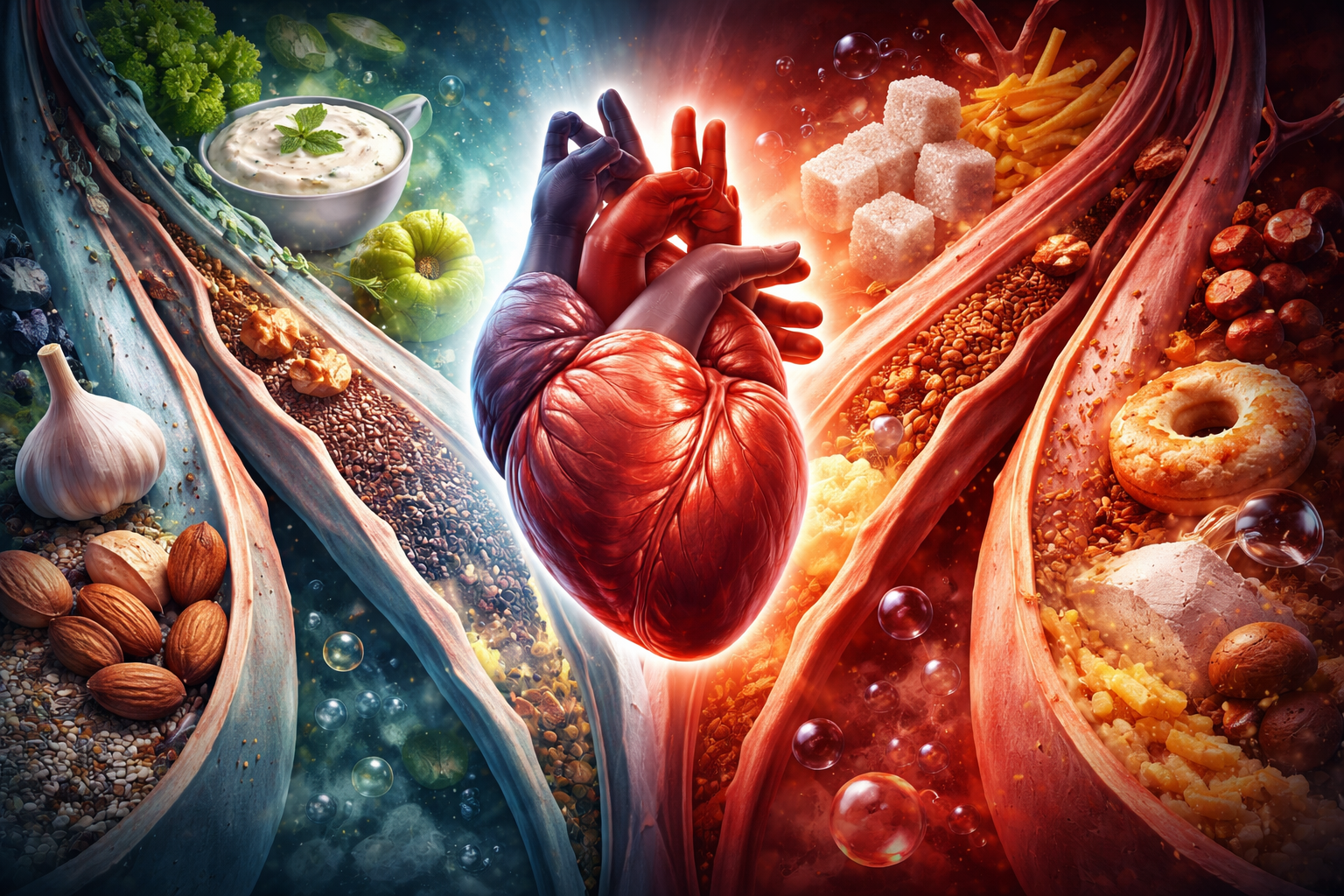
The Myth of Low-Fat Diets and the Rising Risk of Heart Disease
For decades, people have been led to believe that eating a low-fat diet is enough to protect the heart. This belief has shaped eating habits across societies and has been promoted as a simple solution to prevent heart attacks. However, medical experience and emerging understanding of nutrition show that this assumption is incomplete and, in many cases, misleading. Relying only on low-fat food can quietly increase the risk of heart disease rather than reduce it.
A slim body or regular physical activity does not automatically mean good heart health. Many individuals who walk daily, avoid oil, and follow what is traditionally considered a “healthy” diet still develop high cholesterol, borderline blood sugar, and early blockage in their arteries. The problem is that these changes often occur silently. By the time symptoms appear, damage inside the blood vessels may already be significant.
High cholesterol plays a central role in heart disease. When LDL, commonly known as bad cholesterol, rises in the blood, it begins to stick to the inner walls of arteries. Over time, these deposits form plaque, narrowing the arteries and reducing blood flow. As blood flow decreases, the supply of oxygen to the heart becomes limited. In some cases, the plaque ruptures and a blood clot forms at that spot. This sudden blockage is one of the most common triggers of a heart attack.
The encouraging reality is that this process is not fixed. With the right dietary choices, it can be slowed down, controlled, and in some situations partly reversed. The key lies in understanding that not all fats are harmful. The real issue is not fat itself, but the type of fat consumed and the excessive intake of sugar and refined carbohydrates.
Natural foods such as garlic, for example, have long been associated with heart protection. Garlic contains compounds that help relax blood vessels, improve circulation, and reduce bad cholesterol levels. Regular and moderate consumption can also support healthy blood pressure and lower triglycerides, both of which are important for reducing heart attack risk.
Fermented foods such as homemade yoghurt also play a valuable role. These foods improve gut health by supporting beneficial bacteria in the digestive system. A healthy gut reduces inflammation in the body and improves metabolism. Chronic inflammation and metabolic imbalance are closely linked to plaque formation in arteries. In contrast, many packaged probiotic drinks contain added sugar, which can cancel out their potential benefits.
Nuts and seeds are another important part of a heart-friendly diet. Almonds, walnuts, flaxseeds, and chia seeds provide fibre, vitamin E, and healthy fatty acids that strengthen arteries and support smooth blood flow. Fruits like amla, rich in vitamin C, help neutralise free radicals, reduce inflammation, and protect blood vessels from damage. Regular intake supports good cholesterol levels and helps control blood pressure.
A clear pattern emerges when these foods are examined together. They are rich in healthy fats, low in sugar, and largely unprocessed. This stands in sharp contrast to modern diets that are overloaded with refined carbohydrates and hidden sugars. Excess sugar intake leads to insulin resistance, prediabetes, and diabetes, all of which significantly increase the risk of heart disease. In many cases, people remain unaware of these conditions for years.
The long-standing advice to fear fat while ignoring sugar has created an imbalance in dietary habits. True heart health depends on balanced nutrition, not on eliminating one nutrient group entirely. A diet built around healthy fats, adequate protein, natural foods, and minimal sugar offers far better protection for the heart than a strict low-fat approach.
In the end, protecting the heart requires informed choices rather than popular myths. Understanding how food affects the body at a deeper level allows individuals to move beyond outdated beliefs and adopt habits that genuinely support long-term cardiovascular health.