The Mother of All Deals: Decoding the EU-India Strategic Realignment
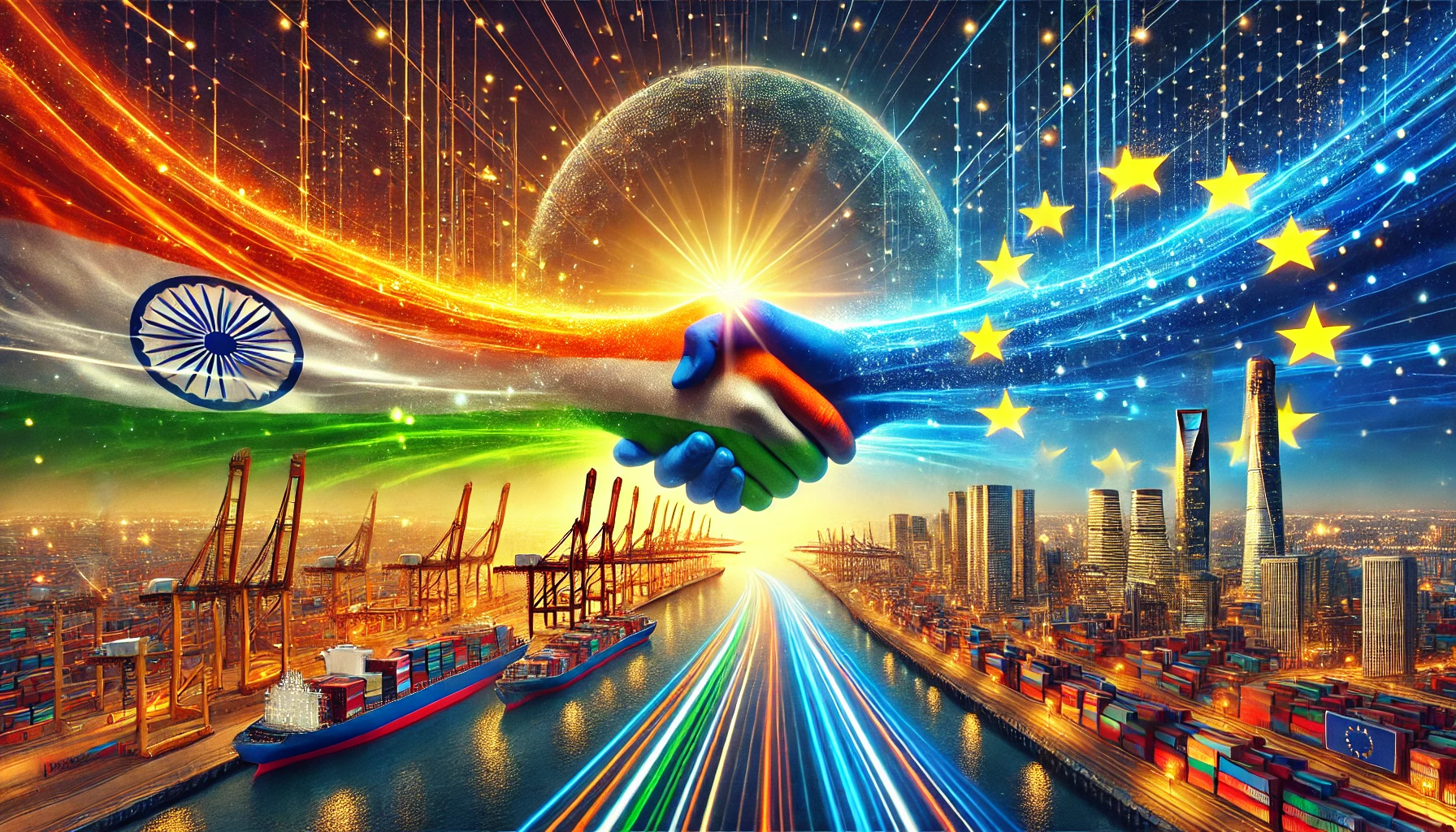
The diplomatic choreography at Hyderabad House in New Delhi this January carried a significance far weightier than the usual bilateral pageantry. As Prime Minister Narendra Modi stood alongside European Commission President Ursula von der Leyen and European Council President António Costa to announce the “Mother of All Deals,” the moment signaled a historic pivot for two of the world’s major democratic powers. This was the definitive end to a nineteen-year odyssey that began with the abandonment of talks in 2007 and languished in stagnation until a recent, frantic diplomatic sprint. Reflecting on this transition, von der Leyen invoked the metaphor of Makar Sankranti—the festival marking the sun’s northward journey—to represent a shift from stillness to growth for an economic bloc and a rising subcontinental giant that together represent two billion people and a quarter of global GDP. As the world’s second and fourth largest economies, the EU and India have transitioned from distant acquaintances to the primary architects of a new, trusted strategic partnership.
The sudden acceleration of these negotiations over the past six months was forged in the crucible of an increasingly volatile international order. The “gusto” with which Brussels and New Delhi approached the final stretch was less about a sudden burst of idealistic alignment and more a cold-eyed response to external shocks. The looming specter of heavy punitive tariffs from the Donald Trump administration in the United States, combined with a shared imperative to diversify manufacturing away from China’s monopoly, transformed a sluggish trade dialogue into an urgent strategic necessity. With the International Monetary Fund projecting India’s ascent as the world’s fourth-largest economy this year, the European Union has recognized that “de-risking” requires more than rhetoric; it demands deep, structural integration with the world’s fastest-growing major economy to ensure resilience against an erratic global trade policy and the weaponization of supply chains.
At the heart of this integration is a massive dismantling of long-standing tariff walls, characterized by a sophisticated “99/97” split in market access. Under the Free Trade Agreement, the EU will eventually eliminate duties on 99 percent of Indian exports by trade value, while India will reciprocate on 97 percent of EU lines. For European industry, the reduction of India’s notoriously high car tariffs—plunging from as much as 110 percent to a mere 10 percent—marks a staggering concession, though it is prudently managed via a Tariff Rate Quota of 250,000 vehicles annually. Notably, fully electric vehicles are expected to be excluded from these initial cuts for the first five years to safeguard domestic investments by Indian manufacturers. Beyond the automotive sector, the deal streamlines commerce through Rules of Origin self-certification and eliminates duties on machinery, chemicals, and pharmaceuticals. European exporters of spirits and wine also find a significant opening, with duties on spirits reduced to 40 percent and wine down to 20-30 percent, contributing to an estimated €4 billion in annual duty savings for European products.
While European high-tech exports gain a foothold in the East, the deal provides a massive fillip to the “Make in India” initiative by leveling the playing field for labor-intensive sectors. The Indian textile and garment industry, which currently navigates duties of up to 12 percent in the EU, is poised for a transformative expansion; with zero-duty access, the sector targets a 30-40 billion export potential, which could create up to seven million new jobs and erase the competitive edge previously held by regional rivals like Bangladesh. This economic opening extends to the European MedTech sector, which gains unprecedented access to the Indian diagnostic and surgical market, a move expected to lower the cost of advanced CT and MRI scanners for Indian hospitals. However, the agreement is balanced by political necessity; sensitive sectors such as dairy, sugar, and cereals remain ring-fenced to protect the livelihoods of millions of small-scale Indian farmers, ensuring that the deal remains tenable within India’s domestic landscape.
Yet the architecture of this realignment is not merely built on crates and containers; its long-term resilience is predicated on a “human and security dimension” that acts as the connective tissue for the two economies. A comprehensive Mobility Pact establishes a facilitative framework for Contractual Service Suppliers (CSS) and Independent Professionals (IP), streamlining the migration of IT specialists, engineers, and researchers. This is bolstered by the launch of the first “EU legal gateway office” in India and a framework to constructively engage on a Social Security Agreement over the next five years—a critical requirement for the Indian workforce abroad. The deal even extends to cultural and scientific soft power, granting practitioners of Indian traditional medicine the right to work under their “home titles” in EU member states where such practices are not yet regulated. This deepening of human ties was underscored by António Costa, who famously displayed his Overseas Citizen of India card during the summit, a symbol of his Goan roots and the ancestral bridges linking the two regions. Complementing this is a new Security and Defence Partnership, intended to tackle maritime threats and facilitate military cooperation in a reshaped global order.
As the focus shifts toward the 2030 horizon, the agreement establishes a blueprint for future-ready trade by addressing the complexities of the EU’s Carbon Border Adjustment Mechanism (CBAM). To support India’s green transition, the EU has pledged €500 million in financial assistance over the next two years to help Indian industry reduce greenhouse gas emissions and meet emerging carbon requirements. While the formal ratification process by the European Parliament and member states lies ahead, the message sent to the global community is one of profound stability. Set against a backdrop of geopolitical turbulence and the 2027 accession targets for partners like Ukraine, the EU-India deal stands as a glimmer of hope for a rules-based system. It marks the emergence of an era where New Delhi’s vision of a “Viksit Bharat 2047” and Brussels’ quest for strategic autonomy converge, positioning both as reliable, indispensable partners in a fundamentally reshaped world order.