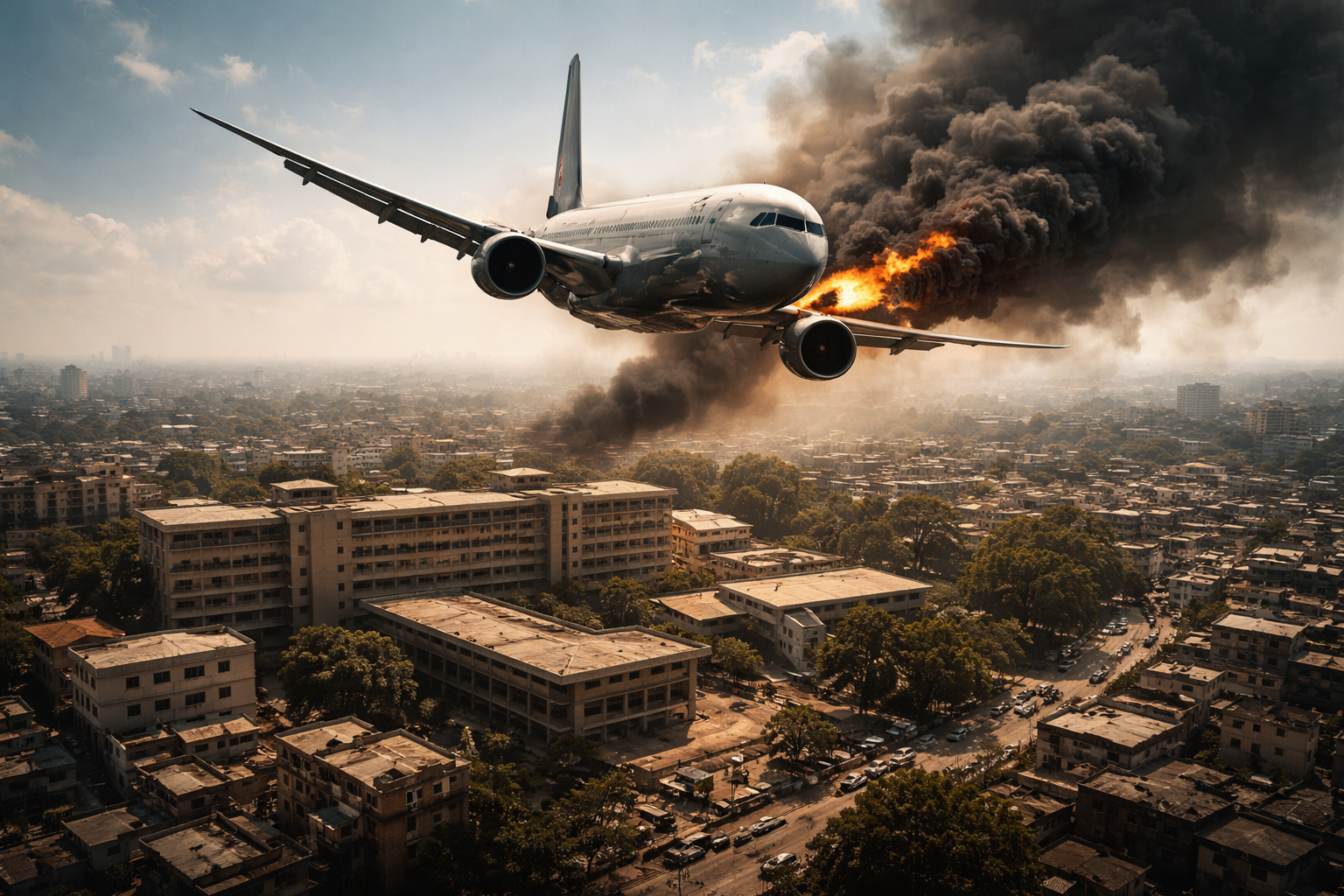
The aircraft accident in Ahmedabad was not merely a tragic mishap but a stark exposure of deeper structural vulnerabilities within India’s civil aviation ecosystem. When a modern aircraft, operated by experienced pilots under clear weather conditions, fails within seconds of take-off, the issue cannot be reduced to individual error or momentary misjudgment. Such incidents compel a wider examination of the systems designed to guarantee safety, and of the hidden points where those systems remain fragile. Aviation safety is sustained not only by visible technology and human skill, but also by countless unseen components whose failure can overturn every layer of protection.
Over the past decade, India’s civil aviation sector has expanded rapidly. Passenger volumes have grown, international connectivity has strengthened, and airlines have inducted technologically advanced aircraft at an unprecedented pace. This expansion has fostered a belief that newer aircraft, equipped with automated systems and advanced materials, are inherently fail-safe. Yet technological sophistication brings its own risks. Highly integrated digital and electrical systems depend on flawless coordination between hardware and software. When this coordination is disrupted by even a minor fault, the window for corrective human intervention narrows sharply. The Ahmedabad accident demonstrates how a seemingly insignificant technical lapse can escalate into an irreversible crisis within moments.
At the heart of this incident lies a fundamental question about maintenance culture. Aviation safety is often discussed in terms of pilot training and air traffic management, but it is equally dependent on the quality, depth, and seriousness of ground-level maintenance. Routine inspections, when treated as procedural obligations rather than risk-based evaluations, lose their preventive value. Aircraft operate under extreme conditions of vibration, temperature variation, and mechanical stress. Over time, these forces can degrade even the smallest components. If maintenance systems are not designed to detect such gradual deterioration, they allow minor defects to evolve into catastrophic failures. The lesson here is unambiguous: safety cannot be assured by checklists alone; it requires constant vigilance and technical scepticism.
Regulatory oversight occupies a central role in this framework. India follows international aviation standards, yet effective safety regulation depends on rigorous enforcement, technical capacity, and institutional independence. When manufacturers, airlines, and regulators operate within blurred boundaries of accountability, safety gaps inevitably emerge. Temporary measures such as grounding fleets or issuing advisories are necessary in the aftermath of accidents, but they do not address systemic weaknesses. Long-term resilience demands independent audits, transparent reporting of technical anomalies, and a regulatory culture that prioritises prevention over compliance statistics.
The social dimension of the tragedy further broadens its significance. Aviation accidents do not affect only those on board. When aircraft operate over densely populated urban areas, failures can have devastating consequences on the ground as well. Students, residents, and workers with no connection to the flight become unintended victims. This reality links aviation safety to urban planning and disaster preparedness. Coordination between civil aviation authorities, local administrations, and emergency response agencies is essential to minimise collateral damage and ensure rapid relief when accidents occur.
The incident also challenges the prevailing assumption that machines are more reliable than humans. Advanced aircraft systems are designed to reduce human error, yet they remain products of human design, maintenance, and oversight. When systems are built without sufficient redundancy or without clear safeguards against false signals, they can misinterpret reality with lethal consequences. Policy responses must therefore focus not only on adopting new technology but on understanding its limitations. Human-centred design, clear warning hierarchies, and manual override capabilities remain vital elements of aviation safety.
Perhaps the most enduring lesson from the Ahmedabad accident is the need for a long-term perspective. Investigations, compensation, and immediate corrective actions are necessary, but they are only the beginning. Sustainable safety requires institutional reform, continuous learning, and investment in preventive mechanisms. Expenditure on safety must be viewed not as a financial burden but as the foundation of public trust. Every passenger who boards an aircraft entrusts their life to a promise of safety upheld by policy, technology, and professional responsibility.
This tragedy stands as a warning against complacency. As aviation systems grow more advanced, their supervision must become proportionately more meticulous. Treating such accidents as rare anomalies would squander an opportunity for meaningful reform. If, instead, they prompt a reassessment of maintenance practices, regulatory strength, and systemic accountability, the loss may at least contribute to safer skies. In aviation, progress is measured not by speed or scale alone, but by the quiet reliability that ensures every journey ends where it is meant to—safely on the ground.
Invisible Failures in Aviation Safety